Creating a more transparent system for high-demand event bookings.
About the project
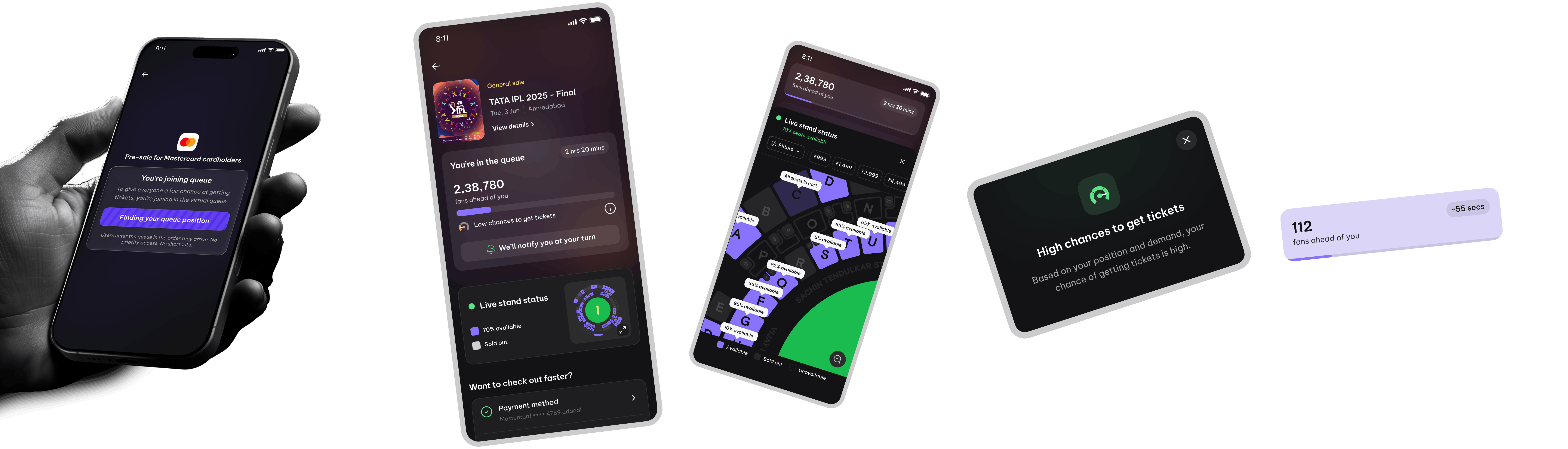
A self-initiated exploration focused on designing a more transparent and anxiety-free virtual queue experience for high-demand events on the District app in India.
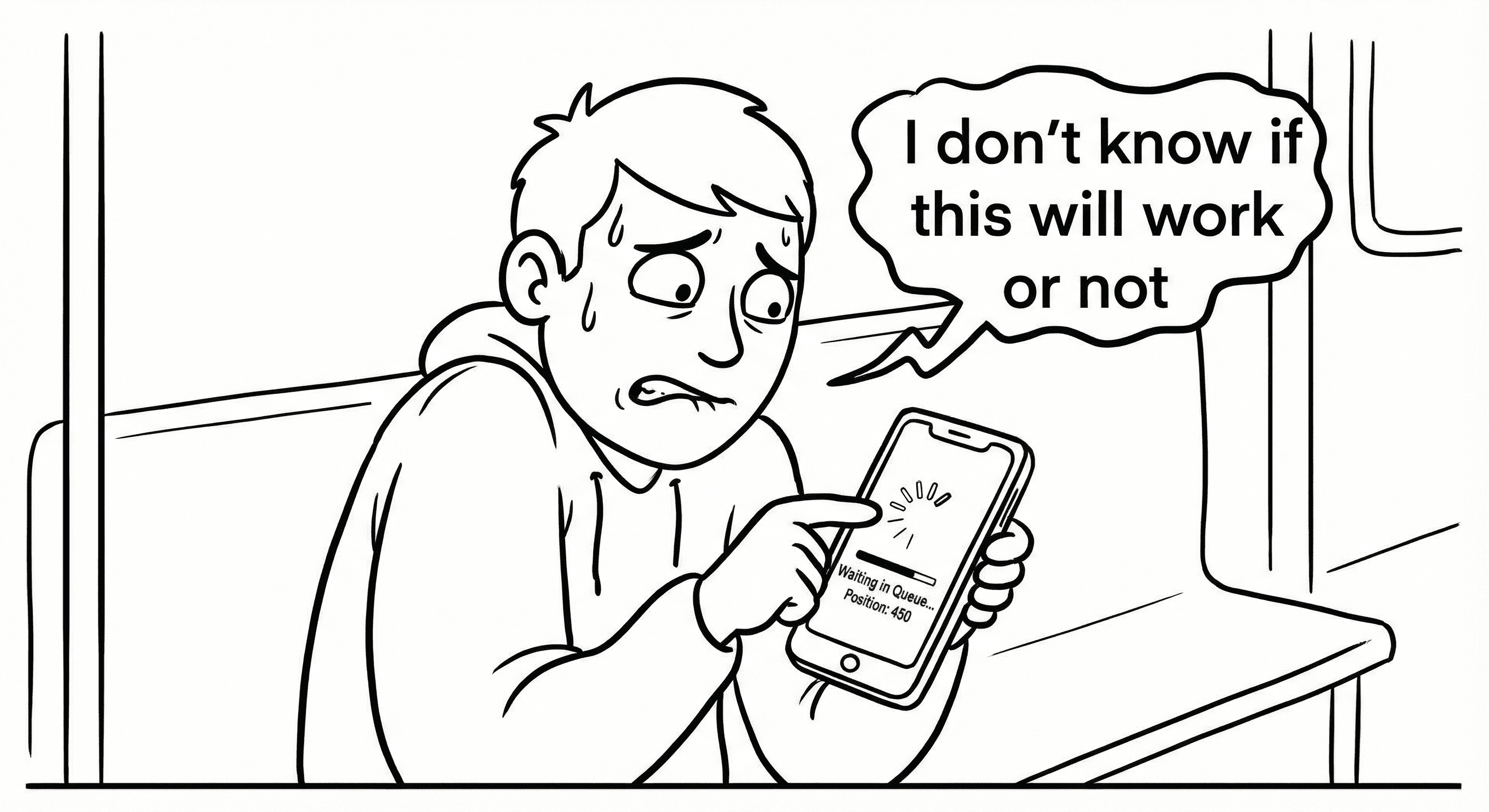
When tickets go live, millions of users attempt to access the platform at the same time. Systems experience heavy load, queues become unpredictable, and uncertainty increases for users. The goal of this project was to explore how a virtual queue could remain stable, fair, and reassuring even during moments of peak demand.
Challenges
Solution
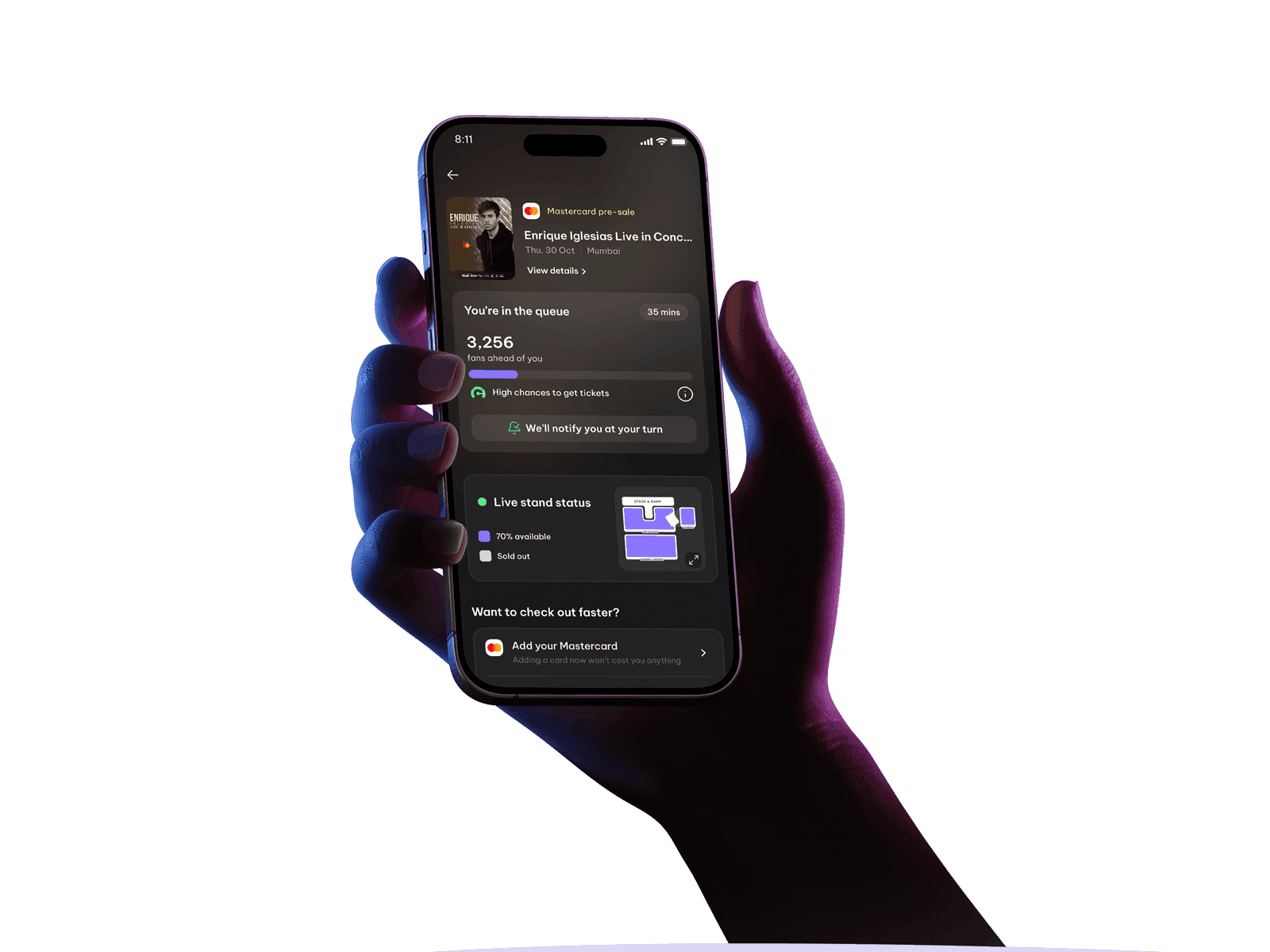
A scalable virtual queue system designed to reduce frustration through clarity and improve user patience by introducing greater predictability into the waiting experience.
Live Queue Status
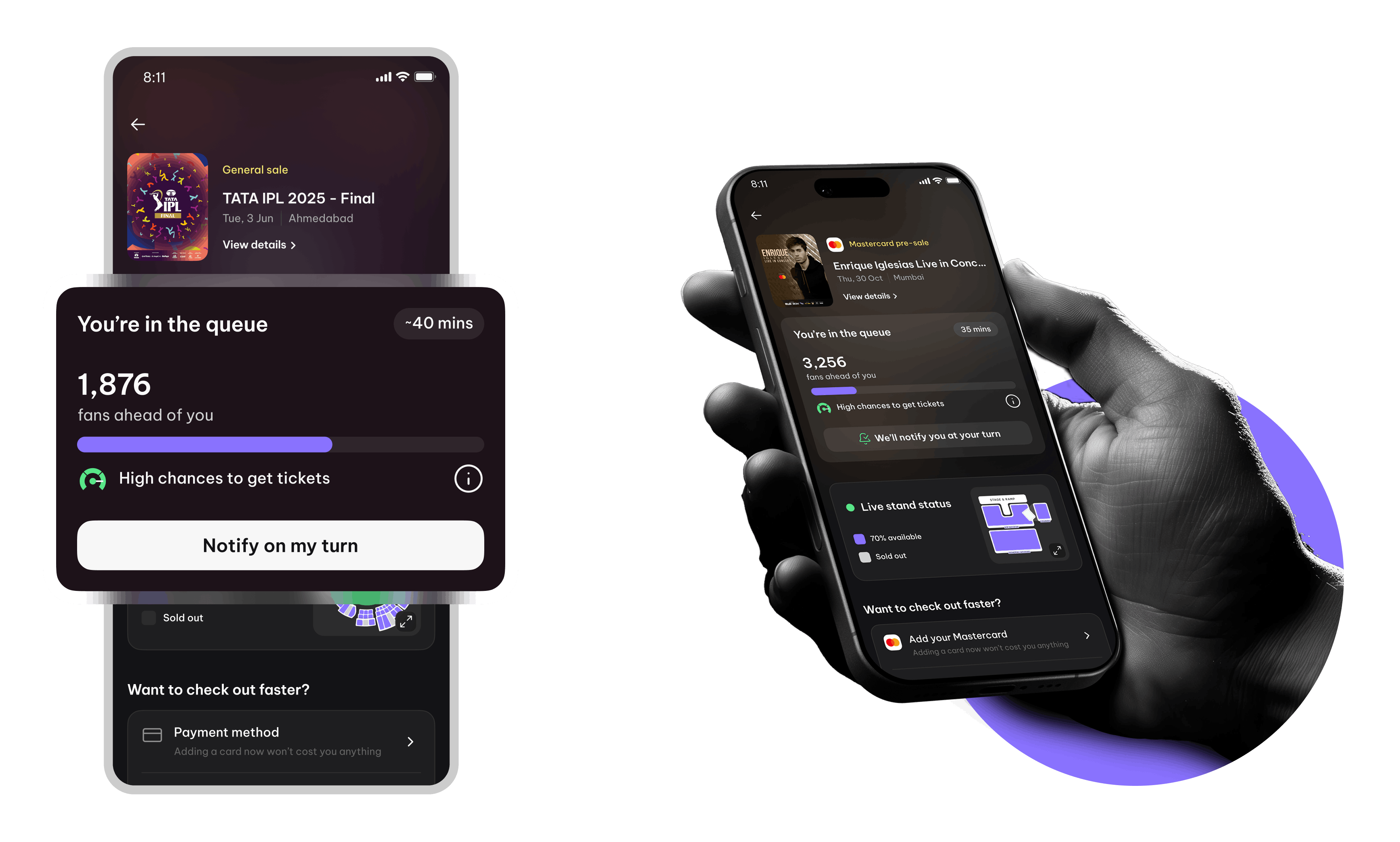
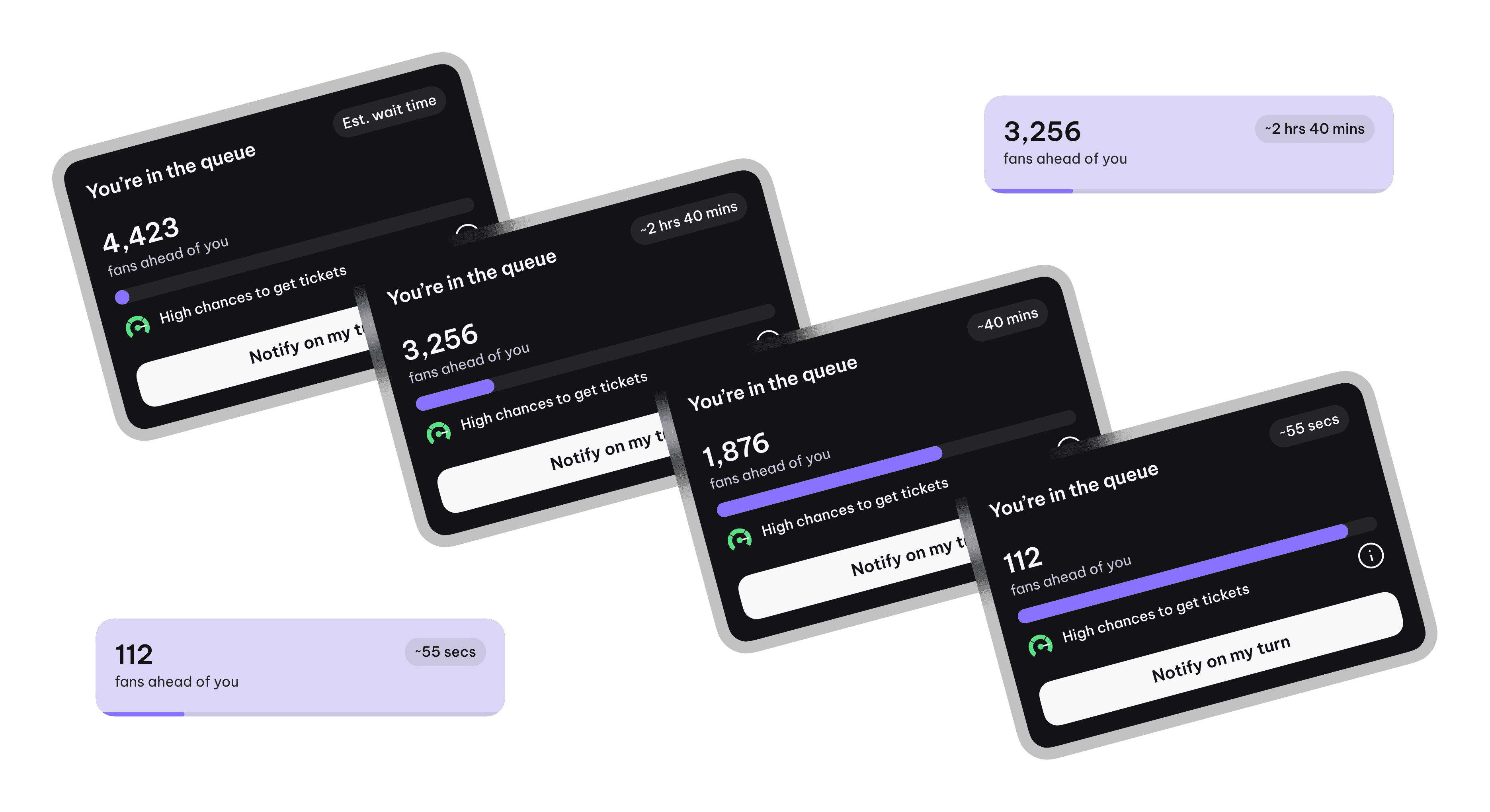
A clear and readable card that displays the user’s queue number, the number of people ahead, the estimated wait time, and a dynamic progress bar.
This provides users with a simple mental model of their place in the queue and reduces uncertainty, which helps lower the chances of users leaving the experience.
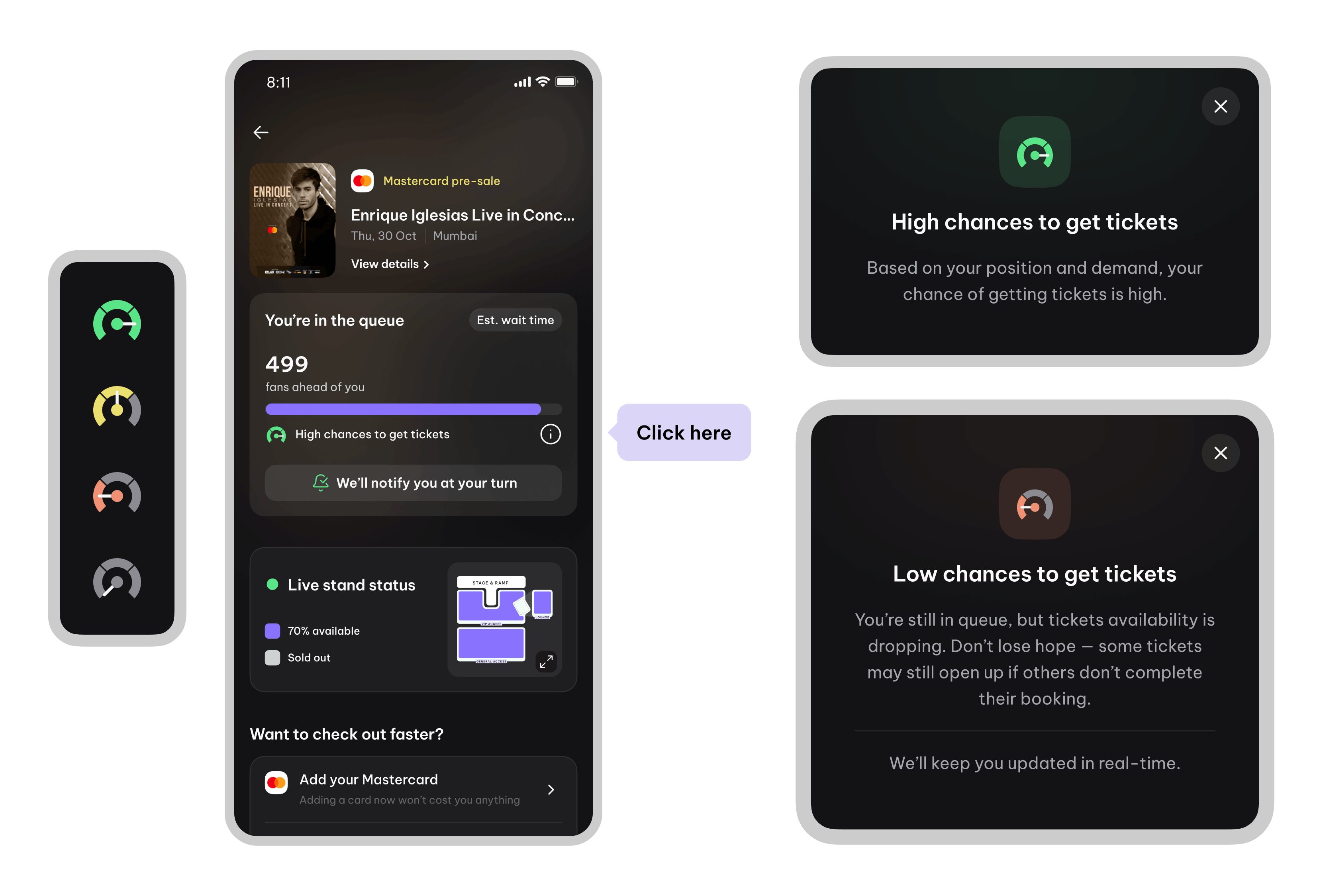
2. Chance of Securing Tickets
A visual indicator that communicates the likelihood of getting seats, displayed as High, Medium, or Low.
This helps set expectations early in the process and communicates the system’s fairness upfront, which can reduce frustration later. The messaging is informed by system load and real-time demand signals.
Estimated Wait Time
Rather than showing vague messages such as “Please wait,” the system provides a realistic time estimate, for example 1 hr 40 mins.
The estimate updates as queue conditions change, helping users understand how long the process may take.
Queue Transparency Messaging
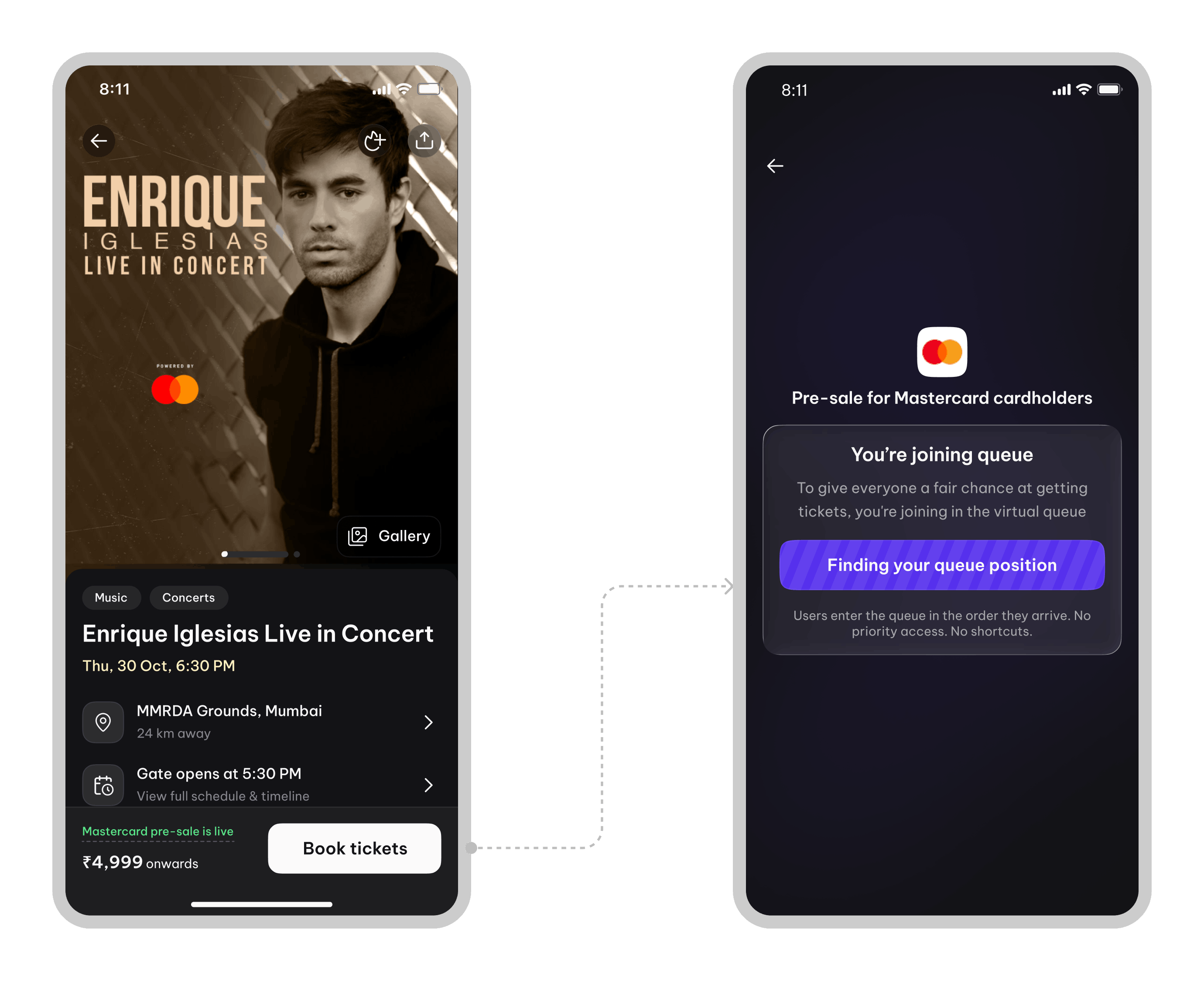
Clear and empathetic messaging explains that users enter the queue in the order they arrive, with no priority access or shortcuts.
This communication helps remove doubt and speculation, which is especially important during high demand events such as IPL ticket releases.
Live Seat Availability
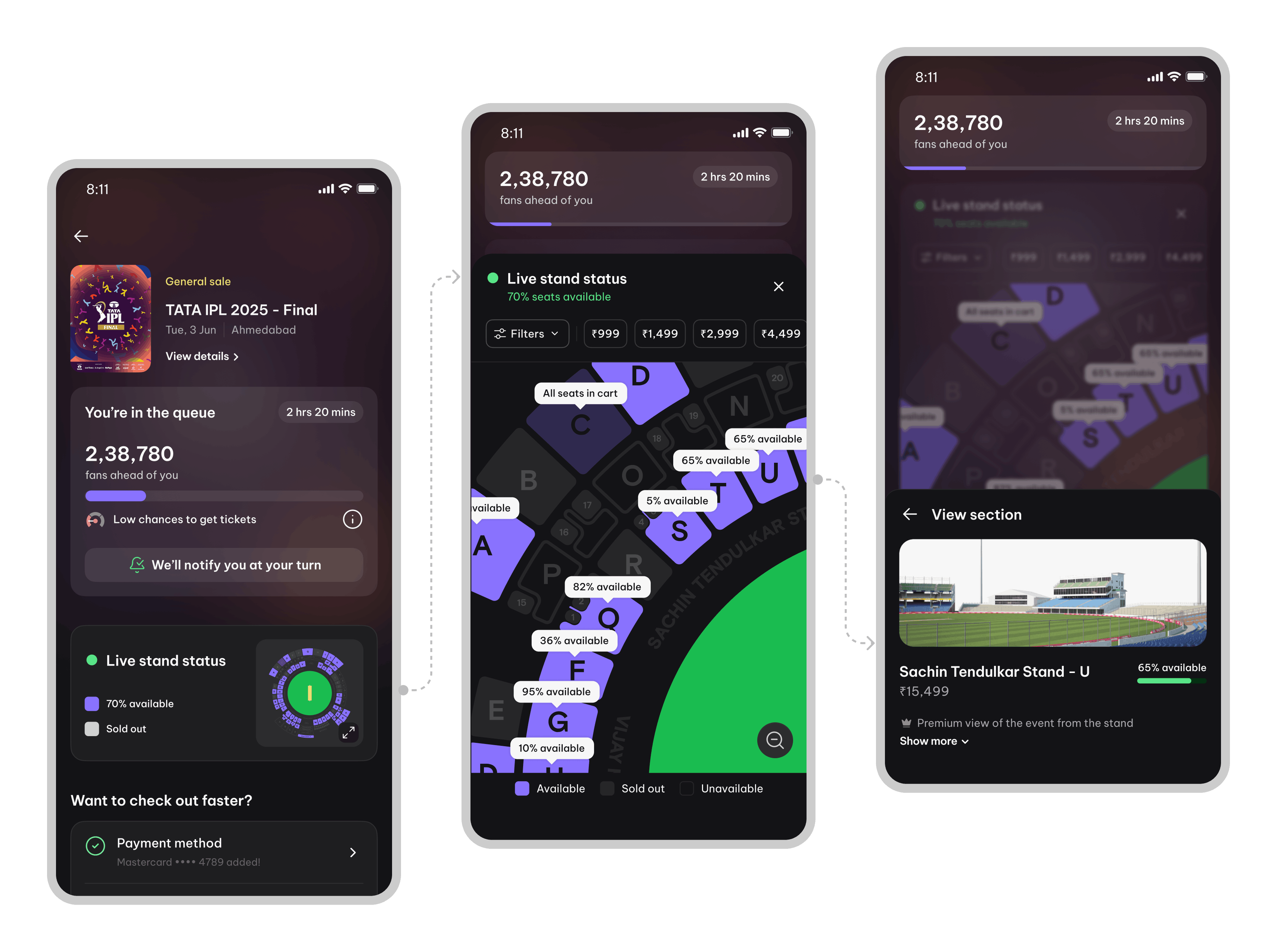
Dynamic indicators display real-time updates such as seats filling up, categories selling out, and suggested alternatives.
This helps users make informed decisions while waiting in the queue and plan their booking more effectively.
Impact
Beforeyougo,herearesomeofthethingsachievedbytheproject.
Not finding what you need?
Reach out anytime. I'm happy to answer any questions about the project or process :)
Lower Queue Drop-Off Risk
Prototype walkthroughs suggested that showing queue position, progress, and realistic wait times helps users understand that the system is moving, which reduces the likelihood of leaving the queue.
Stronger Perception of Fairness
Clear messaging about how the queue works removes ambiguity. Explaining that users enter in order with no priority access builds trust during high-demand ticket releases.
Faster Checkout Readiness
Live seat availability and probability indicators allow users to decide on alternatives while waiting. This helps them move through checkout more quickly once their turn arrives.
Reduced Waiting Anxiety
Providing predictable updates and transparent status indicators makes the waiting experience feel more controlled, which helps lower user anxiety during high-demand ticket drops.